I haven't done regular posts for a while here and thought I should. I'll keep posting about the five points of Calvinism, but I've been considering what text I should work on? I've been pretty exhausted, and so I don't want to do something difficult and unfamiliar. I will eventually be doing M. Alder's volume How To Think About God, but I thought I'd do something easier (for me) for now: The Quran.
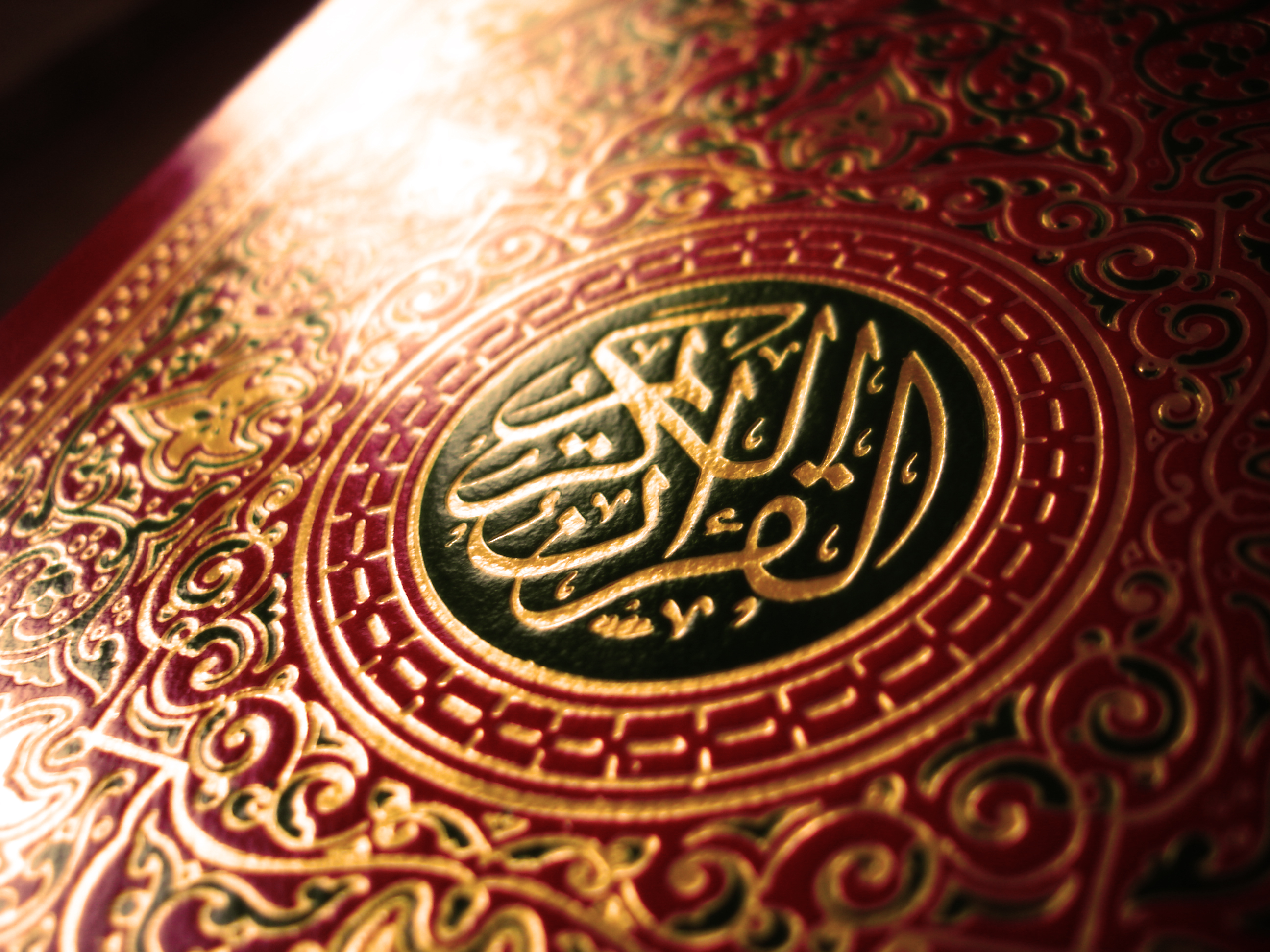
Many people might ask why I am bothering doing the Quran. By Christians this book is generally considered, at best, a heretical text. And it is ultimately sacred to a billion people on the planet. Most people in my position wouldn't touch it.
Here's some reasons why I want to comment on the Quran:
1. I've read it a few times already, including a commentary and I've done some Quran studies. It's pretty familiar to me already, so it's easy.
2. It is easily accessible. I'm going to be using Yusuf Ali's translation primarily, which you can find online at this location.
3. The Quran is much misunderstood and maligned both by those who haven't read it and by some who have. It is good to read it in light of how it was originally intended.
4. I'd like to comment some on Christian assumptions about Islam, if it applies to the Quran.
Here's some introductory notes before we get started:
The Quran is not the same as Islam
The Quran is where Islam began, and it the source of it's most important traditions, but Islam is not limited to it's most holy book. We will be discussing the book, not Islam as a whole. Islam, like all world religions, can't be distilled in a single point of view or theological summary. It is a variety of viewpoints and many interpretations of many texts. It is best not to judge the whole religion based on one text or one point of view. To talk about the Quran is to focus on one slice of Islam, a much bigger pie.
The Quran is Organized Differently
The Quran is divided into Suras, not chapters or books. The Suras aren't organized chronologically, but roughly by size. For the novice, reading the Quran from front to back is misleading, because there is no sense of development. In fact, most of the longer Suras, found in the front of the Quran, are dated later than most of the others. And many of the shorter Suras, at the back of the Quran, are dated early. Thus, my recommendation, if you don't have a list of the chronological arrangement of the Quran, and if you are reading it for the first time is to read the Suras from back to front. This way you have a better sense of the development. In this read of the Quran, I won't follow a strictly chronological order, nor will I be commenting on all the Suras, but I will be referring to this chronological list.
The Real Quran is in Arabic
Every Muslim and every Quranic scholar will tell you that the Quran should really be read in the original language. To hear the Quran recited in Arabic, even a little bit, you can understand why. (Get a taste of it here) The poetry and the language is a part of the experience of the Quran. To read the Quran in English is to grasp a meaning of the Quran, but not to experience it fully. Of course, here we will have to settle for the English. I don't know Arabic and I doubt many (or any) of the readers of the blog will know Arabic.
The Historical Context is Important
Each Sura is a poem which was given to Muhammad on a particular occasion. Each Sura is God speaking to Muhammad about that occasion. Thus, to understand a number of Suras, we have to know the occasion to which the Sura is speaking. This is where we use Quranic commentaries. I have found Yusuf Ali's commentary most helpful in providing a context for each Sura.
I am NOT a Quranic Scholar
Just like the other texts I discuss in this blog, I am not necessarily an expert on the subject. I am just expressing my opinion from my particular theological viewpoint. I will agree with some parts of the Quran and I will disagree with others, just like any other theological text. If I were Muslim, that would be unacceptable, but I am a Jesus-centrist and so my viewpoints come from that perspective. I might get my understanding of the Quran wrong, just like I might any other text, especially ancient. Just blame my ignorance, and please correct me.


